Best front and rear dash cams
The REDTIGER F7NP ($149.98) is the best front-and-rear dash cam for most drivers: a 4K front lens, a rear camera, a STARVIS 2 sensor, and a card in the box.

REDTIGER F7NP 4K Dash Cam Front Rear, STARVIS 2 Sensor, Free Card Included
4K / 2 channel
The REDTIGER F7NP covers both directions with a 4K front camera and a rear camera built on the same STARVIS 2 sensor generation, and it ships with a memory card so setup is plug in and go. At $149.98 it lands in the price band where dual STARVIS 2 sensors are common, without paying flagship-brand pricing.
The three tiers
Beginner: Best cheap front-and-rear pick
Who it is for: a driver who wants both directions covered in 4K without spending past $120
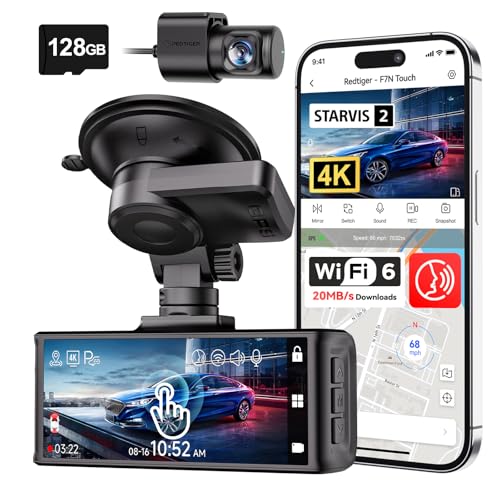 Beginner pickREDTIGER 4K STARVIS 2 Dashcam Front Rear, 5GHz WiFi 20MB/s, Free 128GB Card4K / 2 channel / Wi-Fi$119.99Check price on Amazon
The REDTIGER 4K STARVIS 2 Dashcam gives up nothing on sensor or resolution compared to pricier front-and-rear kits: 4K front, a STARVIS 2 sensor, 5GHz WiFi, and a 128GB card, all for $119.99. That is a full two-camera setup with a card already sized for a full day of driving.
Not for: buyers who want GPS speed and location stamped onto the footage, since this model does not list GPS.
Intermediate: Best with GPS and parking mode included
Who it is for: someone who wants location logging and the option to keep recording while parked, without moving up to a flagship brand
 Intermediate pickVIOFO A129 Pro Duo 4K Dual Dash Cam 3840 x 2160P Ultra HD 4K Front and 1080P Rear Car...4K / 2 channel / GPS / Wi-Fi$189.95Check price on Amazon
The VIOFO A129 Pro Duo is a 4K front-and-rear kit with WiFi, built-in GPS, and parking mode support, at $189.95. VIOFO has one of the longer track records in this category, and the A129 Pro Duo has been a steady mid-tier pick for buyers who want more than a bare-bones dual camera but do not need a flagship sensor.
Not for: anyone unwilling to add a hardwire kit or battery pack, since parking mode needs a power source beyond the car's ignition-switched outlet.
Expert: Best premium front-and-rear pick
Who it is for: a driver who wants the newest sensor generation, GPS, and HDR on both channels and does not mind paying flagship pricing
 Expert pickTHINKWARE ARC900 Dash Cam 4K Front and 2K Rear, Dual STARVIS 2, HDR, GPS4K / 2 channel / GPS$389.99Check price on Amazon
The THINKWARE ARC900 runs a 4K front camera and a 2K rear camera, both on Sony STARVIS 2 sensors, with built-in GPS, at $389.99. It is the upper-tier model in THINKWARE's current ARC lineup and is built for drivers who want the clearest image the category offers in both directions.
Not for: budget-focused buyers, and for anyone who specifically wants a bundled memory card, since the ARC900 listing does not include one.
| Model | Price | Key spec | Best for |
|---|---|---|---|
| REDTIGER 4K STARVIS 2 Dashcam | $119.99 | 4K front + rear, STARVIS 2, WiFi, 128GB card | Cheapest full 4K dual setup |
| REDTIGER F7NP | $149.98 | 4K front + rear, STARVIS 2, card included | Overall best value |
| ROVE R2-4K Dual | $149.99 | 4K front + rear, STARVIS 2, 128GB card | Bundled card, proven sensor |
| VIOFO A129 Pro Duo | $189.95 | 4K front + rear, WiFi, GPS, parking mode | GPS logging and parking mode |
| Nextbase 320XR | $159.99 | 1080p front + rear window cam, parking mode | Rear window cam instead of a lens |
| THINKWARE ARC900 | $389.99 | 4K front + 2K rear, dual STARVIS 2, GPS, HDR | Best image quality in both directions |
What makes a good front-and-rear dash cam?
A front-and-rear dash cam needs a rear camera good enough to read a following car's plate, not just a token second lens. Look for a stated resolution on both channels, since some budget listings only specify the front camera's resolution and leave the rear camera unstated. Every pick on this page states a resolution for the rear or second channel.
The sensor generation matters more than the megapixel number once you are past 1080p. STARVIS 2 sensors, used across REDTIGER, ROVE, VIOFO, and THINKWARE models here, handle low light and headlight glare noticeably better than older sensor generations at the same resolution.
How much bitrate does a front-and-rear setup use?
A 4K front channel runs about 32 Mbps, and a 1080p rear or cabin channel adds roughly 10 Mbps, for about 42 Mbps combined. A 128GB card at that combined rate holds about 6.3 hours before the loop overwrites the oldest footage. Stepping the rear channel down to 2.5K or 2K in the camera's settings, where supported, trades some detail for more hours of buffer on the same card.
Do I need GPS on a front-and-rear dash cam?
GPS stamps speed and location onto the footage, which matters most for proving fault in an intersection or highway incident. It is worth paying for if you drive unfamiliar routes often or want a documented record of speed. If you mostly drive the same commute and want footage only for the rare incident, skip it and put the savings toward a bigger card instead.
How we chose
This page was researched from published manufacturer specifications and verified owner reviews on the retail listings, not hands-on testing. We required a stated resolution on both the front and rear channel before including a model, and we cross-checked sensor names against each brand's own product pages.
Front-only single-channel cameras were excluded from every pick on this page, even where a brand also sells a strong front-only model, since a front-only camera cannot cover the rear-end and hit-and-run scenarios this page is built around.
Buying tips
Does the rear camera need to match the front camera's resolution?
No. A 1080p rear channel is usually enough to identify a following vehicle and read its plate at typical following distance, even when the front camera runs at 4K. Matching resolutions mainly matters if you also plan to use the rear camera as a backup camera replacement.
Where does the rear camera mount?
Most rear cameras mount inside the rear windshield facing out, connected to the front unit by a long cable routed along the headliner and door trim. A few models instead offer a rear window camera pod, like the Nextbase 320XR, which mounts differently; check the listing photos before buying if trim routing is a concern.
Should you budget for a hardwire kit up front?
If parking mode matters to you, add a hardwire kit or battery pack to the order at the same time rather than later, since a front-and-rear camera without parking mode power simply stops recording the moment you turn off the car.
Is a bundled 128GB card enough for two channels?
A 128GB card recording 4K front plus 1080p rear holds about 6.3 hours before looping, which covers a normal driving day but not a full week without checking on it. Rideshare or delivery drivers who want more buffer should plan on 256GB or larger.
Other options across the price range
An even spread from budget to premium. Prices change often.
 Wireless Dash Cam Front and Rear 2K, WiFi APP Dash Camera for Cars with 1.5'' Screen...2K / 2 channel / Wi-Fi$34.99Check price on Amazon
 Dash Cam Front and Rear: 4K+2.5K Dual Channel Dash Cam-5GHz WiFi, GPS Dash Camera for...4K / 2 channel / GPS / Wi-Fi$69.99Check price on Amazon
 VIOFO Dual Dash Cam, 2K 1440P 60fps+1080P 30fps Front and Rear Dash Camera with Wi-Fi...2K / 2 channel / GPS / Wi-Fi$170.99Check price on Amazon
 REDTIGER VC70 4K+2.5K Dash Cam, STARVIS 2 IMX678, Dual HDR, 30MB/s WiFi4K / 2 channel / Wi-Fi$239.99Check price on Amazon
Frequently asked questions
What is the best front-and-rear dash cam under $150?
The REDTIGER F7NP at $149.98 and the REDTIGER 4K STARVIS 2 Dashcam at $119.99 are both 4K front-and-rear kits with a STARVIS 2 sensor and a bundled card. The $119.99 model gives up GPS and touchscreen features that neither has anyway at this price, so the choice mostly comes down to the $30 difference and which retailer listing you prefer.
Should I buy a front-and-rear dash cam or a three-channel dash cam?
A front-and-rear dash cam covers the road ahead and behind the car. A three-channel dash cam adds a third camera facing the cabin, which matters for rideshare drivers, taxi drivers, or anyone who wants footage of what happens inside the car, not just outside it. If you only need road coverage, front-and-rear is enough and costs less.
Does a front-and-rear dash cam use twice the memory card space?
Not quite twice, since the rear channel usually records at a lower resolution and bitrate than the front. A typical 4K front plus 1080p rear setup runs about 42 Mbps combined, versus about 32 Mbps for the front channel alone, so the rear channel adds roughly a third more data usage rather than doubling it.
Do I need parking mode on a front-and-rear dash cam?
Parking mode lets the camera keep recording, or wake on motion, while the car is off and parked. It matters most if you park on the street or in a shared lot where hit-and-runs and break-ins happen while you are away from the car. It requires a hardwire kit or battery pack, since the car's ignition-switched power cuts off when you turn off the engine.
Is GPS worth paying extra for on a front-and-rear dash cam?
GPS logs speed and location alongside the video, which helps prove fault in intersection and highway incidents and can support a claim after an accident. Models like the VIOFO A129 Pro Duo and THINKWARE ARC900 include it; cheaper front-and-rear kits generally do not, so decide whether the documentation is worth the higher price before you buy.