Tire pressure by temperature calculator
Tire pressure changes about 1 psi for every 10 F of air temperature change. A tire set to 35 psi at 70 F reads about 28 psi at 0 F, which is why the low-pressure light comes on during the first cold morning.
Recheck after big temperature swings and at least monthly.
new psi = (psi + 14.7) x (new F + 459.67) / (old F + 459.67) - 14.7This is the gas law applied to absolute pressure with the tire volume held constant. Always set pressure cold, before driving; a tire warmed by driving reads a few psi high.
Gauges and inflators to correct it
Prices from Amazon at the time of writing; they change often.
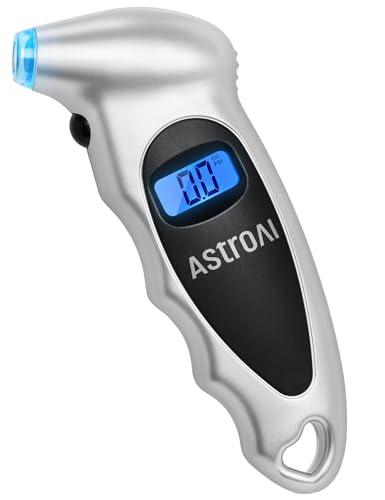
 AstroAI L7 Tire Inflator Portable Air Compressor,150 PSI Cordless Bike Pump150 PSI / cordless$23.49Check price on Amazon


How much does tire pressure drop in the cold?
Pressure at each outside temperature for tires set at 70 F.
| Set at 70 F | 50 F | 32 F | 10 F | 0 F | -20 F |
|---|---|---|---|---|---|
| 30 psi | 28.3 | 26.8 | 24.9 | 24.1 | 22.4 |
| 32 psi | 30.2 | 28.6 | 26.7 | 25.8 | 24.1 |
| 35 psi | 33.1 | 31.4 | 29.4 | 28.4 | 26.6 |
| 38 psi | 36.0 | 34.2 | 32.0 | 31.0 | 29.0 |
| 42 psi | 39.9 | 37.9 | 35.6 | 34.5 | 32.4 |
| 50 psi | 47.6 | 45.4 | 42.7 | 41.4 | 39.0 |
Why does the tire pressure light come on when it is cold?
Air contracts as it cools. Because pressure is measured against the atmosphere, a 70 F to 0 F swing takes about 13 percent off absolute pressure, which is 6 to 7 psi on a car tire. Most tire pressure monitoring systems warn at about 25 percent under placard, so a tire that was a little low in autumn triggers the light on the first cold morning.
Add air to the placard figure when it is cold, and let it out again only if the pressure rises above the placard in warm weather. Checking monthly with a gauge catches slow leaks the warning light misses.
Frequently asked questions
How much does tire pressure change with temperature?
About 1 psi for every 10 F change in air temperature, slightly more at higher pressures. A tire at 35 psi on a 70 F day reads about 28 psi at 0 F. The change comes from the gas law acting on absolute pressure, so it applies to every tire filled with air or nitrogen.
Should I add air to my tires in winter?
Yes, to bring them back to the placard pressure when cold. Do not overinflate to compensate for future cold snaps; set them to the placard at the current temperature and check again after big swings. Underinflation wears the shoulders, hurts fuel economy and weakens grip.
Does nitrogen stop pressure changing with temperature?
No. Nitrogen follows the same gas law as air, which is already about 78 percent nitrogen. It leaks through rubber slightly more slowly and carries less moisture, but it drops just as much on a cold morning.
Why do my tires lose pressure overnight in cold weather?
Usually they have not leaked; the air has cooled. A car parked warm in the evening and checked at dawn can read several psi lower. If the pressure is still low after warming back up, or one tire keeps dropping faster than the others, look for a puncture or a leaking valve.