Battery charger vs battery maintainer
A high-amp charger like the YHCHKJ 20A Smart Charger ($56.99) can fully recharge a depleted battery in a few hours, while a low-amp maintainer like the Battery Tender Junior 800mA ($39.95) is built to sit connected for weeks or months, topping off a battery that is already mostly charged without ever overcharging it.

YHCHKJ 20A Car Battery Charger, 12/24V Smart Trickle Charger & Maintainer
20A
Restoring a significantly depleted battery back to full charge quickly
Verdict: Use a charger when a battery is significantly depleted and you want it back to full charge quickly. Use a maintainer when a battery is already in decent shape and you just need to keep it topped off during storage, like a seasonal vehicle, motorcycle, or boat sitting for weeks or months at a time.
The two sides
- Battery chargerYHCHKJ 20A Car Battery Charger, 12/24V Smart Trickle Charger & Maintainer20A$56.99Check price on Amazon
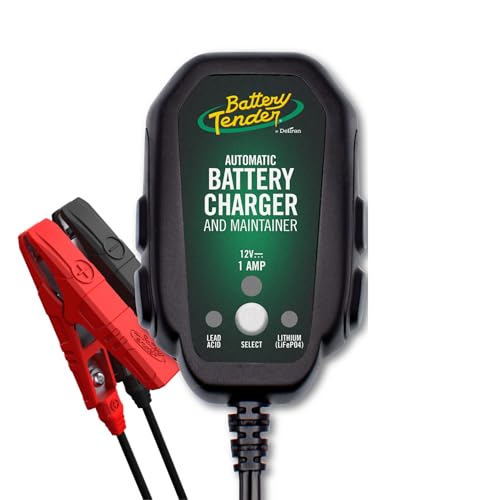 Battery maintainerBattery Tender Junior 12V, 800mA Battery Charger and Maintainer for Lead Acid and...0.8A$39.95Check price on Amazon
Battery charger
Best for: Restoring a significantly depleted battery back to full charge quickly
- 20A output recharges a depleted battery in a few hours instead of a day or more
- Smart charging profile works on both 12V and 24V systems
- Fast enough to be useful the same day you discover a dead battery
Drawbacks: Higher amperage is not ideal for leaving connected unattended for weeks at a time on a battery that is already full Costs more than a basic low-amp maintainer built purely for storage
Battery maintainer
Best for: Keeping an already-charged battery topped off during long storage
- Designed to stay connected for months without overcharging, ideal for a car, motorcycle, or boat in storage
- Low 800mA output is gentle enough for smaller powersports and lithium batteries
- Compact and inexpensive compared to a full-size charger
Drawbacks: Far too slow to recharge a significantly depleted battery in any reasonable time Not meant to be your primary tool for reviving a dead battery
| Charger | Maintainer | |
|---|---|---|
| Price range in this catalog | $25.99 to $245.00 | $15.99 to $89.99 |
| Typical amperage | 6A to 25A | 0.75A to 2.5A |
| Time to recharge a 50Ah battery | About 3 hours at 20A | About 75 hours at 0.8A |
| Meant to stay connected for months | Depends on the model, check for a maintainer mode | Yes, by design |
| Best for | A dead or significantly depleted battery | A stored vehicle's already-charged battery |
| Example model | YHCHKJ 20A Smart Charger, $56.99 | Battery Tender Junior 800mA, $39.95 |
What actually separates a charger from a maintainer?
The defining difference is amperage and what happens once the battery reaches full charge. A charger like the YHCHKJ 20A model is built to move a lot of current quickly, recharging a significantly depleted battery in a matter of hours. A maintainer like the Battery Tender Junior is built around a much smaller current, often under 1 amp, specifically so it can be left connected indefinitely without pushing a full battery into overcharge territory.
Many modern smart chargers blur this line by including a maintainer mode that automatically switches to a lower trickle current once the battery reaches full charge, which is worth checking for if you want one device that handles both jobs.
How much faster does a charger actually recharge a battery?
Charge time works out to roughly the amp-hours you need to replace, times 1.2 to account for charging inefficiency, divided by the charger's amperage. Restoring 50 amp-hours to a battery on a 20A charger takes roughly 3 hours. The same 50 amp-hour restoration on a 0.8A maintainer would take roughly 75 hours, over three full days, which is exactly why a maintainer is the wrong tool for a battery that needs a real recharge rather than a top-off.
This is not a flaw in the maintainer, it is the point. A maintainer's low current is intentional so it can sit connected to an already-charged battery for months without ever overcharging it, something a 20A charger is not designed to do unattended long term.
- 50Ah battery on a 20A charger: about 3 hours
- 50Ah battery on a 0.8A maintainer: about 75 hours
- 20Ah top-off on a 0.8A maintainer: about 30 hours
Which one should you leave connected to a stored vehicle?
For a vehicle sitting for weeks or months, whether a motorcycle over the off season, a boat, or a car you drive rarely, a maintainer is the safer long-term choice specifically because of its low current and design intent. A high-amp charger left connected to an already-full battery for months is more likely to be a poor fit unless it explicitly includes a float or maintainer mode built for that use.
If you are not sure whether your charger is safe to leave connected long term, check its manual for a specific maintainer or float mode rating, or default to a dedicated low-amp maintainer for anything you plan to store for more than a couple of weeks.
Do you need both a charger and a maintainer?
If you own a daily driver, a charger alone covers you for the rare case the battery dies, and you can unplug it once the battery is full. If you also own a seasonal vehicle, motorcycle, RV, or boat that sits unused for stretches, a dedicated maintainer is worth owning separately, since leaving a full-size charger connected for months is not what it was designed for.
More options on both sides
Prices change often.


Frequently asked questions
Can I use a battery maintainer to jump start my car?
No, a maintainer's low current, often under 1 amp, cannot deliver the instant burst needed to crank an engine. A maintainer restores or preserves charge over hours to days, it does not provide a one-time high-current push the way a jump starter does. If your battery is fully dead right now, you need a jump starter, not a maintainer.
Will a high-amp charger damage a battery if left connected too long?
It can, on a basic non-smart charger without a maintainer or float mode, since it may keep pushing current into an already-full battery. Modern smart chargers, including several models in this catalog explicitly labeled charger and maintainer, taper down automatically once the battery reaches full charge, making them safer to leave connected. Check your specific model's rating before leaving any charger unattended for an extended period.
Is a solar maintainer as effective as a plug-in one?
A solar maintainer works well for a vehicle stored outdoors with reliable sun exposure, since the panel continuously offsets a battery's natural self-discharge. It is generally slower and less consistent than a plug-in maintainer on cloudy days or vehicles stored in a garage, so match the maintainer type to where the vehicle actually sits.
Can lithium batteries use the same charger or maintainer as lead-acid?
Not always. Lithium batteries need a charging profile matched to their chemistry, and using a charger built only for lead-acid can undercharge or, in some cases, damage a lithium battery. Check that your charger or maintainer's listing explicitly states lithium (LiFePO4) compatibility before using it on a lithium battery.
How do I know if my battery needs a charger or just a maintainer?
Check the resting voltage with a multimeter. Around 12.6V is roughly a full charge, 12.4V is roughly 75 percent, and 12.2V is roughly 50 percent. A battery reading 12.4V or higher is generally a good candidate for a maintainer, while anything meaningfully below that benefits from a real charger first.