Hardwire kit vs OBD power cable
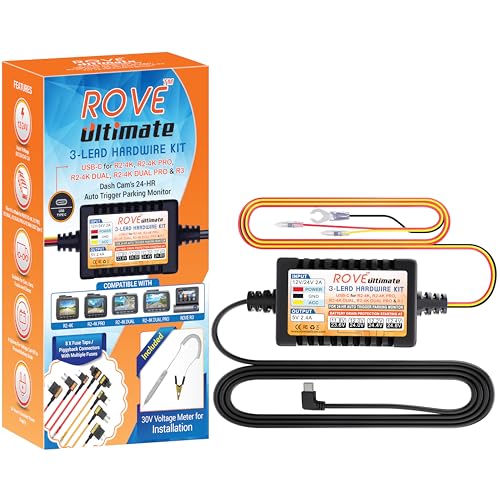
A fuse-box hardwire kit like the VANTRUE 11.5ft USB-C Hardwire Kit ($24.99) taps directly into your fuse panel with a built-in low-voltage cutoff, while an OBD-II power cable like the VIOFO OP100 ($59.99) plugs into the OBD port with no fuse tapping but pulls from a circuit that is not switched by the ignition in every vehicle.

Vantrue 11.5ft USB-C Hardwire Kit, Compatible with All Vantrue Dashcams
Drivers who want the most reliable parking mode power and are comfortable with a basic fuse tap
Verdict: Choose a fuse-box hardwire kit if you want the most reliable ignition-switched power and do not mind spending 20 to 30 minutes with a fuse tap and trim panel tool. Choose an OBD-II power cable if you want a tool-free, plug-and-play install and your dash cam's cutoff settings are adjustable enough to protect your battery on that circuit.
The two sides
- Fuse-box hardwire kitVantrue 11.5ft USB-C Hardwire Kit, Compatible with All Vantrue Dashcams$24.99Check price on Amazon
 OBD-II power cableVIOFO OP100 OBD-II Constant Power Cable for Dash Cam, Type-C USB Port$59.99Check price on Amazon
Fuse-box hardwire kit
Best for: Drivers who want the most reliable parking mode power and are comfortable with a basic fuse tap
- Taps a fuse slot that is genuinely switched by the ignition on nearly every vehicle
- Built-in low-voltage cutoff protects your car battery during extended parking mode
- No dependency on a shared OBD port that other accessories might already use
Drawbacks: Install takes longer, typically 20 to 30 minutes with a fuse tap and trim panel tool Requires identifying the correct always-on or switched fuse slot in your specific vehicle's fuse box
OBD-II power cable
Best for: Drivers who want a tool-free install with no fuse box work
- Plugs directly into the OBD-II diagnostic port, no fuse tapping or trim removal
- Install takes minutes since there is nothing to splice
- Easy to unplug and move to another vehicle
Drawbacks: OBD ports are not ignition-switched in every vehicle, so parking mode draw depends more heavily on the cable's own cutoff settings Occupies the OBD port, which can conflict with a separate OBD scanner, tracker, or insurance dongle
| Hardwire kit | OBD-II power cable | |
|---|---|---|
| Price range in this catalog | $9.68 to $59.99 | $9.99 to $59.99 |
| Install method | Splices into a fuse box slot with an add-a-fuse tap | Plugs into the OBD-II port, no splicing |
| Install time | About 20 to 30 minutes | About 5 minutes |
| Typical low-voltage cutoff | 11.6V to 12.4V, adjustable on most kits | 11.6V to 12.4V, adjustable on most cables |
| Tools needed | Fuse tap, trim panel tool, test light recommended | None |
| Shares a port with other devices | No | Yes, the OBD-II port |
| Example model | VANTRUE 11.5ft Hardwire Kit, $24.99 | VIOFO OP100, $59.99 |
What is the actual difference between these two power methods?
Both a fuse-box hardwire kit and an OBD-II power cable do the same basic job: they give your dash cam a constant power source so it can run parking mode when the car is off, instead of only recording while the engine is running. The difference is where they draw that power from. A hardwire kit like the VANTRUE 11.5ft Hardwire Kit splices into a specific fuse slot in your fuse box, usually one confirmed to be switched by the ignition, using a small add-a-fuse adapter that sits between the original fuse and the new tap.
An OBD-II power cable like the VIOFO OP100 instead plugs into the OBD-II diagnostic port that nearly every car built since the mid 1990s has under the dashboard. There is no splicing involved, you simply plug it in the way you would plug in a code scanner. The tradeoff is that not every vehicle's OBD port is switched the same way a properly chosen fuse slot is, so the cable's own low-voltage cutoff does more of the work protecting your battery.
Which one protects your car battery better in parking mode?
Both methods rely on a low-voltage cutoff to stop drawing power before your battery is too depleted to start the engine, and most kits on the market, hardwired or OBD, cut off somewhere in the 11.6V to 12.4V range. A resting lead-acid battery reads about 12.6V at full charge, 12.4V at roughly 75 percent, and 12.2V at roughly 50 percent, so a cutoff around 11.6 to 12.0V leaves meaningful reserve for the next start.
A two-channel dash cam typically draws around 4 to 5 watts while recording in parking mode, which works out to roughly 0.4A from a 12V battery. Left running continuously without a cutoff, that draw adds up over a weekend, which is exactly why the cutoff setting matters more than which port you plugged into.
Does the OBD port stay powered when the car is off?
This varies by make and model, and it is the single biggest reason to research your specific vehicle before choosing an OBD cable over a hardwire kit. Some vehicles keep the OBD port live at all times regardless of ignition state, which means an OBD power cable behaves almost like an always-on fuse tap rather than an ignition-switched one, leaning even more heavily on the cable's cutoff voltage to protect your battery. A hardwire kit sidesteps this uncertainty because you choose the fuse slot yourself, ideally one confirmed switched with a test light before you finish the install.
Which install should a first-time installer pick?
If you have never worked inside a fuse box and want the fastest path to parking mode, start with an OBD-II power cable, since there is nothing to splice and you can return to a standard install if it does not work out. If you are comfortable with a basic fuse tap and want the most predictable, ignition-switched power source, the hardwire kit is the more dependable long-term choice, especially for a vehicle you plan to keep for years.
More options on both sides
Prices change often.



Frequently asked questions
Will a hardwire kit or OBD cable void my car's warranty?
Neither typically voids a factory warranty on its own, since both are non-permanent, add-a-fuse style installs rather than cuts into the vehicle's factory wiring. That said, warranty policies vary by manufacturer, so if your vehicle is still under a bumper-to-bumper or powertrain warranty, it is worth a quick call to your dealer to confirm before you install either type.
Can I use an OBD power cable if I already have an OBD scanner plugged in?
Generally no, most vehicles have a single OBD-II port and only one device can occupy it at a time. If you already run an insurance telematics dongle, a fleet tracker, or a code reader that stays plugged in, a fuse-box hardwire kit is the better choice since it does not compete for that port.
How do I find a switched fuse for a hardwire kit?
Use a test light or multimeter with the ignition off to find a fuse slot with no power, then check the same slot again with the ignition on. A slot that reads power only when the ignition is on is switched, which is what you want for parking mode to actually turn off when the car is off. Your fuse box cover usually lists circuit names that can point you toward likely candidates before you start testing.
What happens if the low-voltage cutoff fails or is set too high?
If the cutoff is set too high, parking mode may shut off sooner than you would like, missing an incident. If a cutoff fails entirely, the dash cam can keep drawing power until your battery is too weak to start the car. Most kits let you test the cutoff behavior after install, and it is worth confirming yours works before relying on it for unattended parking mode.
Do I need an electrician or installer for either option?
Most drivers install both types themselves with basic tools. A fuse-box hardwire kit takes longer and benefits from a trim panel tool and a test light, but neither requires cutting factory wiring or professional-grade skills. If you are not comfortable working near a fuse box at all, a professional installer or car audio shop can typically do either install in well under an hour.