Best 3-channel dash cams for rideshare and cabin coverage
The Eivikga 3 Channel Dash Cam ($139.99) is built specifically for rideshare and taxi use, adding a cabin-facing camera to front and rear coverage in one kit.

Eivikga 3 Channel Dash Cam Front and Rear Inside for Rideshare & Taxi
3 channel
The Eivikga 3 Channel Dash Cam is marketed and specced specifically for rideshare and taxi drivers, covering front, rear, and cabin in one three-channel unit for $139.99. For a driver whose main reason to add a third camera is documenting what happens inside the car with passengers, a purpose-built rideshare model is a more direct fit than a general three-channel camera with rideshare features bolted on.
The three tiers
Beginner: Best cheap 3-channel pick
Who it is for: a driver who wants front, rear, and cabin coverage in 4K without spending past $60
 Beginner pick4K Dash Cam Front and Rear Inside,3.16" IPS,3 Channel Dash Cam for Car with 5G...4K / 3 channel / Wi-Fi$59.99Check price on Amazon
The TOOXYZ 4K Dash Cam covers front, rear, and cabin at 4K resolution, adds 5G WiFi, parking mode support, and a free 64GB card, all for $59.99. Getting three-channel coverage with a bundled card this cheap is unusual; most three-channel kits at this spec level cost noticeably more.
Not for: drivers who want GPS logging, since it is not listed on this model.
Intermediate: Best 3-channel pick with GPS included
Who it is for: someone who wants location and speed logging alongside cabin coverage, without moving up to a premium brand
 Intermediate pick70mai 4K Dash Cam Front and Rear Inside, 3 Channel Car Dash Camera for Cars, Dashcam...4K / 3 channel / GPS / Wi-Fi$109.99Check price on Amazon
The 70mai 4K Dash Cam covers front, rear, and cabin at 4K, and adds WiFi, GPS, parking mode, and a 64GB card, for $109.99. 70mai has built a steady following in the mid-range three-channel space, and this model rounds out the GPS gap left by cheaper three-channel kits.
Not for: buyers who want a flagship sensor generation on all three channels; that upgrade shows up at the next tier.
Expert: Best premium 3-channel pick
Who it is for: a rideshare or delivery driver who wants the newest sensor generation on all three channels and does not mind paying flagship pricing
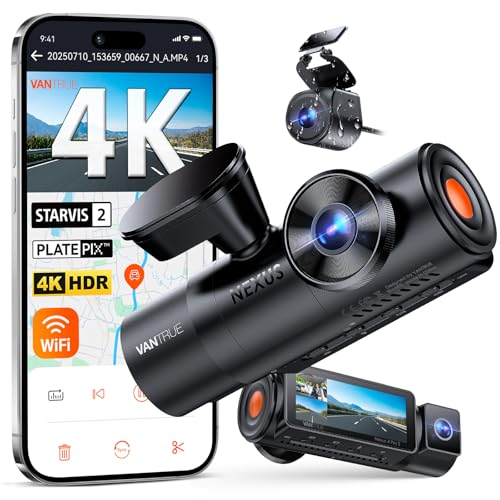 Expert pickVantrue N4 Pro S 4K 3 Channel Dash Cam w/Triple STARVIS 2, 4K+1080P+2.5K Front Inside...4K / 3 channel$249.99Check price on Amazon
The Vantrue N4 Pro S runs 4K on the front camera with triple STARVIS 2 sensors across front, cabin, and rear, plus parking mode support, at $249.99. Vantrue is one of the established premium brands in the three-channel category, and running the newer sensor generation on all three lenses, not just the front, is the main upgrade this tier buys.
Not for: budget-focused buyers, since this is close to double the price of the mid-range picks on this page for a sensor upgrade on the rear and cabin channels.
| Model | Price | Key spec | Best for |
|---|---|---|---|
| TOOXYZ 4K Dash Cam | $59.99 | 4K front + rear + cabin, WiFi, parking mode, 64GB card | Cheapest 3-channel kit |
| WECOOL 4K UHD | $77.99 | 4K front + rear + cabin | Simple 3-channel with no extras |
| HGLEQ 2.5K Dash Cam | $79.99 | 2.5K front + rear + cabin, WiFi, parking mode | Night vision claim on the cabin lens |
| 70mai 4K Dash Cam | $109.99 | 4K front + rear + cabin, WiFi, GPS, parking mode, 64GB card | Best value with GPS |
| Eivikga 3 Channel | $139.99 | 3 channel, built for rideshare and taxi | Purpose-built for rideshare |
| Vantrue N4 Pro S | $249.99 | 4K front, triple STARVIS 2, parking mode | Best sensor on all 3 channels |
| VIOFO A229 Pro 3CH | $309.99 | 4K front + rear + cabin, STARVIS 2 | VIOFO firmware and support |
Why add a third camera facing the cabin?
A cabin-facing camera documents what happens inside the car, not just outside it. For rideshare and delivery drivers, that matters for disputes with passengers, insurance claims after an incident inside the vehicle, and platform requirements that increasingly expect interior footage. For a personal vehicle, a cabin camera is less commonly needed unless you specifically want interior monitoring.
The Eivikga 3 Channel Dash Cam is marketed directly at this use case, while models like the TOOXYZ, 70mai, and Vantrue picks are general three-channel cameras that also work well for rideshare without being built around it specifically.
How much extra memory card space does a third channel need?
Adding a cabin channel typically adds roughly the same bitrate as a rear channel, commonly around 10 Mbps for a 1080p cabin lens. A three-channel setup running 4K front plus two lower-resolution channels can land around 50 to 55 Mbps combined, which fills a given card noticeably faster than a two-channel front-and-rear setup at around 42 Mbps. Budget for a larger card, 128GB or above, if you want a comparable number of hours of buffer to a two-channel kit.
What should rideshare and taxi drivers look for specifically?
Beyond three-channel coverage, rideshare and delivery drivers benefit most from parking mode, since cars sit in unfamiliar lots and pickup zones for long stretches, and from a bundled or easy-to-source large memory card, since these cars log far more hours per week than a personal commuter vehicle. GPS is also more valuable for rideshare drivers than for casual drivers, since it documents route and speed for platform disputes.
- Cabin camera coverage of the passenger area
- Parking mode for long waits between rides
- A large or bundled memory card, since rideshare hours add up fast
- GPS for route and speed documentation
How we chose
This page was researched from published manufacturer specifications and verified owner reviews on the retail listings, not hands-on testing. We required a listed cabin or third-channel spec before including a model, and we noted separately when a listing was explicitly marketed toward rideshare or taxi use versus general three-channel use.
We spread picks across price tiers to reflect that three-channel coverage is available at a genuinely low starting price, with the higher tiers mainly buying a newer sensor generation across all three lenses rather than a fundamentally different feature set.
Buying tips
Do all three channels need to be 4K?
No. Most three-channel dash cams, including the picks here, run 4K on the front camera and a lower resolution on the rear and cabin channels, which is normally enough to identify a following vehicle or see what is happening inside the cabin.
Is a rideshare-specific model worth it over a general three-channel camera?
A rideshare-specific model like the Eivikga is built around that use case from the ground up, but a general three-channel camera with parking mode, GPS, and a cabin lens, like the 70mai or Vantrue picks here, covers the same needs and gives you a broader accessory and firmware ecosystem to draw on.
Does a cabin camera record audio by default?
Many three-channel dash cams include a microphone that records cabin audio alongside the video, which is separate from the audio-recording consent question that applies to any dash cam with passengers in the car.
How much bigger a card do I need for three channels?
Plan on at least 128GB, and 256GB if you drive many hours per week, since a three-channel setup runs a higher combined bitrate than a two-channel front-and-rear kit and fills a given card size faster.
Other options across the price range
An even spread from budget to premium. Prices change often.
 4 Channel Dash Cam 360° View Front Rear Inside & Left Right,4K+1080P*3 FHD Car Camera,5...4K / 4 channel / Wi-Fi$59.99Check price on Amazon
 3 Channel Dash Cam Front and Rear Inside, 2.5K Front Cabin Recorder with Super Night...2.5K / 3 channel / Wi-Fi$79.99Check price on Amazon

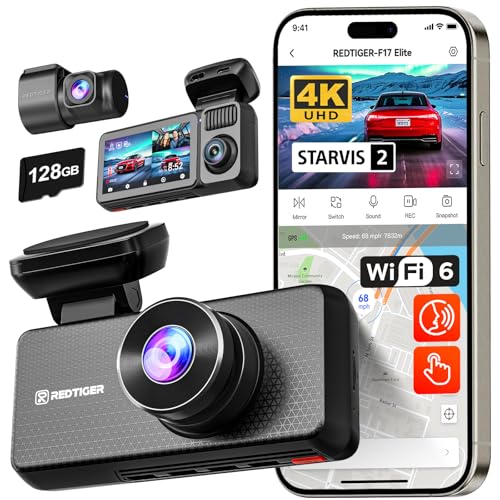 REDTIGER F17 Elite 4K Dash Cam 3 Channel, STARVIS 2 IMX678 & IMX675, 128GB Card, Full...4K / 3 channel / GPS / Wi-Fi$289.99Check price on Amazon
Frequently asked questions
What is the best 3-channel dash cam for rideshare drivers?
The Eivikga 3 Channel Dash Cam at $139.99 is built specifically for rideshare and taxi use with front, rear, and cabin coverage in one unit. For a cheaper option with GPS and a bundled card, the 70mai 4K Dash Cam at $109.99 covers the same three channels plus location logging.
Do I need a 3-channel dash cam if I do not drive for rideshare?
Usually not. A front-and-rear two-channel dash cam covers the incidents that happen on the road around your car. A third, cabin-facing channel mainly matters if you specifically want footage of what happens inside the car, which is most relevant to rideshare, taxi, and delivery drivers who have passengers or cargo in the vehicle.
Does a cheap 3-channel dash cam like the TOOXYZ hold up as well as a Vantrue?
The TOOXYZ at $59.99 matches the Vantrue N4 Pro S on front-channel resolution but uses an unstated sensor rather than the Vantrue's triple STARVIS 2 sensor setup, which mainly affects low-light and night performance across all three channels rather than daytime footage.
How much memory card space does a rideshare driver need?
Given the extra hours rideshare and delivery driving puts on a dash cam compared to casual driving, plan on at least 256GB of high-endurance storage so the loop does not overwrite an entire shift's footage before you have a chance to review it if needed.
Is recording passengers with a cabin camera legal?
Windshield-mount placement and audio-recording consent laws vary by state, and some states require all parties in a conversation to consent to being recorded, which can apply to cabin audio with passengers present. Check your local law and consider posting a visible notice or disclosing recording to passengers if you are unsure.