Best dash cam battery packs
The 70mai Dash Cam Battery Pack BL96NNX ($219.99) is the best all-around pick, with a 96Wh LiFePO4 cell rated for up to 30 hours of parking mode.
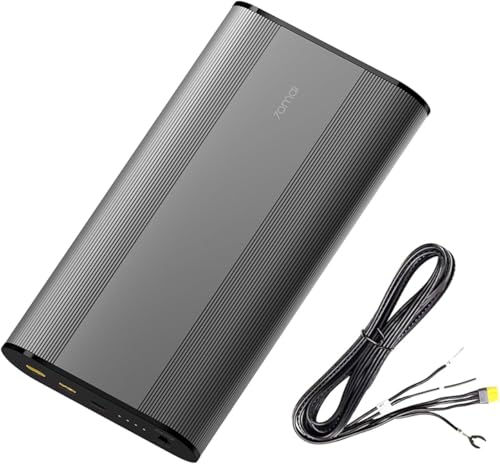
The 70mai Dash Cam Battery Pack BL96NNX uses a 96Wh LiFePO4 cell and is rated for up to 30 hours of parking mode, at $219.99. That balance of capacity and runtime sits above the entry-level packs on this page without reaching the price of the premium brand-matched packs, which makes it the strongest all-around pick for drivers who park somewhere unattended for long stretches.
The three tiers
Beginner: Best cheap battery pack
Who it is for: a driver who wants parking mode power without touching the car's own battery or fuse box, on a limited budget

The REDTIGER Dash Cam Backup Power uses a LiFePO4 cell and is built for easy setup, at $99.00. It is the least expensive dedicated battery pack in this category, and LiFePO4 chemistry is a safer, more temperature-stable choice than older lithium-ion packs for a device that sits in a hot car.
Not for: buyers who want a stated watt-hour capacity or parking-mode hour rating, since this listing does not specify either number.
Intermediate: Best mid-range battery pack with fast charging
Who it is for: someone who wants a stated capacity and quick recharge time between long parking sessions

The TXL Dash Cam Battery Pack holds 128Wh in a LiFePO4 cell and recharges in about 45 minutes, at $159.99. That fast recharge time matters if you only get a short window to top off the pack between drives, and 128Wh is enough capacity for a solid stretch of parking mode recording on most two-channel cameras.
Not for: buyers who want a brand-matched hardwiring kit included, since this listing does not bundle one.
Expert: Best premium battery pack
Who it is for: a driver who wants a battery pack from an established dash cam brand with the largest stated capacity in this category

The THINKWARE iVolt Xtra holds 7500 mAh and is built as a dedicated external battery pack for THINKWARE dash cams, at $369.99. Buying the battery pack from the same brand as the camera reduces the chance of a connector or voltage mismatch, and THINKWARE's iVolt line has been in market long enough to have a track record with its own camera lineup.
Not for: budget shoppers, and for anyone whose dash cam is not a THINKWARE model, since brand-matched packs are built around that brand's connector and power draw.
| Model | Price | Key spec | Best for |
|---|---|---|---|
| REDTIGER Dash Cam Backup Power | $99.00 | LiFePO4, easy setup | Cheapest dedicated battery pack |
| TXL Dash Cam Battery Pack | $159.99 | 128Wh LiFePO4, 45-minute fast charging | Fast recharge between drives |
| 70mai Dash Cam Battery Pack BL96NNX | $219.99 | 96Wh LiFePO4, up to 30-hour parking mode | Overall best value |
| BlackboxMyCar PowerCell 8 | $349.99 | Includes spliced hardwiring kit for THINKWARE cams | THINKWARE owners who also want a hardwire kit |
| Blackvue B-130A | $359.99 | 12V/24V battery for parking mode | Blackvue-matched setups |
| THINKWARE iVolt Xtra | $369.99 | 7500 mAh external battery pack | Largest stated capacity, THINKWARE-matched |
Why choose a battery pack instead of a hardwire kit?
A battery pack carries its own separate cell, so parking mode power never draws from the car's starting battery at all. That removes any risk of accidentally draining the car battery too far to start the engine, which is the main failure mode a hardwire kit's low-voltage cutoff is designed to prevent in the first place. The tradeoff is that a battery pack has a fixed runtime set by its own capacity, while a hardwire kit can draw on the car battery's much larger capacity for longer parking mode sessions.
Battery packs are also a simpler install in cars where accessing the fuse box is difficult or where you would rather not run wiring behind interior trim at all.
How long does a dash cam battery pack actually last?
Runtime depends on the pack's capacity and the camera's power draw. The 70mai BL96NNX states up to 30 hours of parking mode on its 96Wh cell, which works out to roughly 3.2 watts of average draw, close to the 4 to 5 watt range typical of a two-channel dash cam in parking mode, allowing for the pack not running the camera at full continuous recording the entire time. A pack's stated hours are a starting point; actual runtime varies with temperature, recording mode, and whether the camera is recording continuously or only on motion.
Why do dash cam battery packs use LiFePO4 cells?
LiFePO4, or lithium iron phosphate, cells handle heat better and have a longer usable life than the lithium-ion cells used in many consumer electronics, which matters for a pack that sits inside a car and can see extreme temperature swings. Every dedicated dash cam battery pack on this page that states its chemistry uses LiFePO4 for this reason.
How we chose
This page was researched from published manufacturer specifications and verified owner reviews on the retail listings, not hands-on testing. We compared stated capacity, cell chemistry, recharge time, and whether a pack is sold as a brand-matched accessory versus a general-purpose pack across current listings in this category.
We did not assign a watt-hour capacity or hour rating to any pack whose own listing did not state one, even where a similarly priced pack from another brand includes that number.
Buying tips
How much capacity do I actually need?
Match the pack's stated hours to how long your car typically sits parked and unattended between drives. A pack rated for 30 hours, like the 70mai BL96NNX, comfortably covers an overnight or a workday in a parking lot; shorter-rated packs suit drivers who park for just a few hours at a time.
Does a battery pack still need a memory card and, in some cases, a hardwire cable?
Yes, a battery pack replaces the power source for parking mode, not the dash cam or the card. Some packs, like the BlackboxMyCar PowerCell 8, include a hardwiring kit in the box for connecting to the camera; others expect you to already have the right cable for your camera.
Is a brand-matched battery pack worth paying more for?
It removes guesswork about connector fit and voltage compatibility with that brand's own dash cams, which is the main reason the THINKWARE iVolt Xtra and Blackvue B-130A cost more than the general-purpose REDTIGER and TXL packs on this page.
Where should a battery pack be stored in the car?
Follow the maker's instructions for mounting location, and avoid leaving the pack somewhere it will bake in direct sun for extended periods, since extreme heat shortens the life of any lithium battery, LiFePO4 included.
Other options across the price range
An even spread from budget to premium. Prices change often.


Frequently asked questions
What is the best dash cam battery pack?
The 70mai Dash Cam Battery Pack BL96NNX at $219.99 is the best all-around pick, with a 96Wh LiFePO4 cell rated for up to 30 hours of parking mode. For a cheaper option, the REDTIGER Dash Cam Backup Power at $99.00 covers the basic job of powering parking mode without a stated capacity number.
Is a battery pack better than a hardwire kit for parking mode?
A battery pack never draws from the car's starting battery, which removes the risk a hardwire kit's low-voltage cutoff is built to manage. A hardwire kit can run parking mode longer by drawing on the car's much larger battery capacity, and it costs less. The right choice depends on whether you value zero risk to the car battery or longer unattended runtime more.
How many hours of parking mode does a dash cam battery pack provide?
It depends on the pack's capacity and the camera's power draw. The 70mai BL96NNX states up to 30 hours on its 96Wh cell. A two-channel dash cam typically draws about 4 to 5 watts in parking mode, so actual runtime scales with the pack's watt-hour rating and how the camera's parking mode is configured.
Why do dash cam battery packs use LiFePO4 instead of regular lithium-ion?
LiFePO4 cells tolerate heat better and have a longer usable life than standard lithium-ion cells, which matters for a pack that stays inside a car and experiences large temperature swings. Every dedicated pack in this category that states its chemistry uses LiFePO4.
Can I leave a dash cam battery pack in a hot car?
Follow the manufacturer's stated storage temperature range, and avoid leaving any lithium battery pack, including LiFePO4 packs, in a closed car during extreme heat for extended periods, since prolonged high heat shortens battery life and can pose a safety risk.