Hardwire kit vs dash cam battery pack
A hardwire kit like the ROVE Ultimate Dash Cam Hardwire Kit ($29.99) runs parking mode off your car's own battery with a low-voltage cutoff, while a standalone battery pack like the 70mai BL96NNX ($219.99) uses its own 96Wh LiFePO4 cell to power parking mode for up to 30 hours without touching your car battery at all.
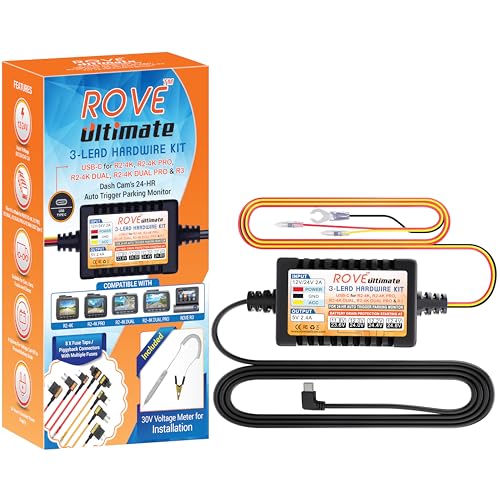
ROVE Ultimate Dash Cam Hardwire Kit, USB-C Port, 24Hr Parking Monitoring
Daily drivers who want the cheapest path to parking mode
Verdict: Choose a hardwire kit if you drive often enough that your alternator keeps recharging whatever parking mode uses, and you want the cheapest setup. Choose a standalone battery pack if your car sits parked for days at a time, you are worried about draining a battery you cannot easily jump, or you want parking mode to run for a set number of hours with zero risk to your starting battery.
The two sides
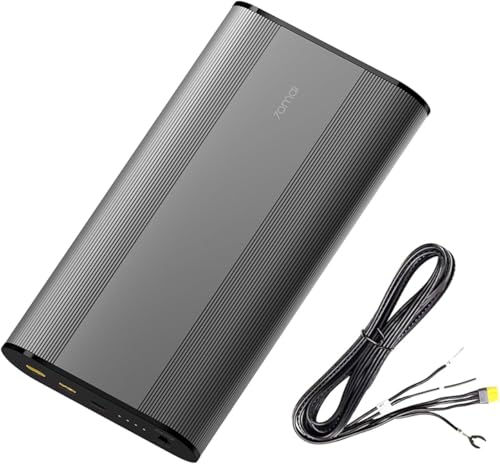 Dash cam battery pack70mai Dash Cam Battery Pack BL96NNX, 96Wh LiFePO4 Backup Power, Up to 30-Hour Parking...$219.99Check price on Amazon
Hardwire kit
Best for: Daily drivers who want the cheapest path to parking mode
- Low upfront cost, well under the price of most standalone battery packs
- No separate battery to charge, monitor, or eventually replace
- Draws only what parking mode needs, then recharges automatically once you drive again
Drawbacks: Draws from your car's starting battery, so a low-voltage cutoff is essential to avoid a dead battery Not ideal for vehicles that sit parked for many days between drives
Dash cam battery pack
Best for: Vehicles that sit parked for extended periods, or drivers who want zero risk to the starting battery
- Runs parking mode from its own 96Wh LiFePO4 cell, rated up to 30 hours, with no draw on the car battery
- Fast recharge, about 45 minutes to top the 96Wh cell back up once you are driving
- Better fit for RVs, storage units, seasonal vehicles, or long airport parking stretches
Drawbacks: Higher upfront cost, often several times the price of a basic hardwire kit Adds a physical battery pack that needs its own mounting location in the vehicle
| Hardwire kit | Battery pack | |
|---|---|---|
| Price range in this catalog | $9.68 to $59.99 | $99.00 to $369.99 |
| Power source for parking mode | Car's own 12V starting battery | Standalone LiFePO4 cell, separate from the car battery |
| Typical parking mode runtime | Depends on cutoff voltage and how full the car battery is | Up to 30 hours on the 70mai BL96NNX (96Wh) |
| Risk to car's starting battery | Present without a working low-voltage cutoff | None, the pack is fully separate |
| Recharge time | Automatic while driving | About 45 minutes on the 70mai BL96NNX while driving |
| Best for | Daily drivers, frequent short trips | Vehicles parked for days at a time |
| Example model | ROVE Ultimate Hardwire Kit, $29.99 | 70mai BL96NNX, $219.99 |
How do these two parking mode power sources actually differ?
A hardwire kit like the ROVE Ultimate Dash Cam Hardwire Kit connects your dash cam directly to your car's electrical system, usually through a fuse tap, and draws power from the same 12V battery that starts your engine. It relies entirely on a low-voltage cutoff, typically in the 11.6V to 12.4V range, to stop drawing power before the battery gets too depleted to crank the engine.
A battery pack like the 70mai BL96NNX skips the car's battery entirely. It is a standalone lithium iron phosphate (LiFePO4) cell that charges up while you drive, then powers parking mode on its own once the car is off. Because it never touches the car's starting battery, there is no scenario where parking mode leaves you stranded with a dead car battery, the pack simply runs out of its own charge and parking mode stops.
How long does each option actually last in parking mode?
A hardwire kit's runtime depends on how full your car battery is and where the cutoff is set. A resting lead-acid battery at 12.6V is roughly 100 percent charged, 12.4V is roughly 75 percent, and 12.2V is roughly 50 percent. A two-channel dash cam recording in parking mode draws around 4 to 5 watts, about 0.4A, so the practical runtime before hitting a typical 11.6 to 12.0V cutoff depends heavily on your battery's health and how recently you drove.
A battery pack sidesteps that uncertainty with a fixed, rated runtime. The 70mai BL96NNX is rated for up to 30 hours of parking mode from its 96Wh cell, a number that does not depend on your car battery's age or state of charge, which makes it far easier to predict for a car left at an airport or in long-term storage.
Which is safer for a car that sits parked for days?
For any vehicle that sits for multiple days between drives, a battery pack is the safer choice specifically because it removes the car's starting battery from the equation entirely. A hardwire kit's cutoff protects against a dead battery in theory, but an older or already-weak battery can still end up too depleted to start reliably even with a cutoff working correctly, since it starts each parking stretch from a lower baseline.
This matters most for seasonal vehicles, RVs, boats stored on a trailer, and cars left in long-term airport or work parking lots. A dedicated LiFePO4 pack keeps parking mode running on schedule without gambling on the health of a battery you may not check for days.
Is the extra cost of a battery pack worth it?
If you drive daily and your parking stretches are typically overnight, a hardwire kit's low cost and automatic recharge make it the more practical choice, and the price difference (often $200 or more) is hard to justify. If your vehicle regularly sits parked for multiple days, or if a dead starting battery would be a serious inconvenience because the car is hard to access or jump, the battery pack's predictable, isolated runtime is worth the higher price.
More options on both sides
Prices change often.


Frequently asked questions
Can I use both a hardwire kit and a battery pack together?
Some dash cam owners do run a hardwire kit as the primary power source and add a battery pack for extended parking stretches, though most battery packs are designed to work standalone rather than alongside a hardwire connection. Check your specific dash cam and battery pack's compatibility before combining the two, since wiring both into the same camera without guidance can cause charging conflicts.
Will a dash cam battery pack drain if the car is not driven for weeks?
Yes, a battery pack has a finite charge and will eventually run out if the car sits far longer than its rated runtime, at which point parking mode simply stops recording until you drive again and it recharges. This is still safer than a hardwire kit in that scenario, since the pack running empty does not risk your car's ability to start.
Is LiFePO4 safer than other lithium battery types for a car?
LiFePO4 (lithium iron phosphate) is generally considered one of the more thermally stable lithium chemistries used in consumer battery packs, which is part of why it shows up often in dash cam battery packs meant to sit inside a hot car. Still, follow the manufacturer's stated storage temperature range and avoid leaving any lithium pack in a closed car during extreme heat.
Does a hardwire kit's cutoff voltage need to be adjusted for my car?
Many hardwire kits let you choose or adjust the cutoff voltage, and the right setting depends on your battery's age and your driving frequency. A higher cutoff (closer to 12.4V) is more conservative and protects an older battery, while a lower cutoff (closer to 11.6V) allows longer parking mode runtime on a healthy, newer battery.
How long does a dash cam battery pack take to fully charge?
It depends on the model and how depleted it is, but the 70mai BL96NNX is rated to recharge in about 45 minutes of driving, which is fast enough that most daily commutes fully top it off before the next time the car is parked for an extended stretch.