Why car batteries die when parked
A car battery left parked slowly self-discharges, and small background draws like the clock, alarm, and computer modules pull additional current, so a battery reading 12.6V, about 100%, can drop toward 12.0V, about 25%, after weeks of sitting unused without a maintainer like the Battery Tender Junior at $37.95.

12V 2.5W Solar Car Battery Charger Maintainer, Solar Panel Trickle Charger
solar
The main piece of gear for this job. The rest of what you need is below.
Why does a battery lose charge just sitting there?
Two separate things drain a parked car's battery: the battery's own natural self-discharge rate, which happens even with nothing connected to it, and the vehicle's parasitic draw, the small constant current pulled by the clock, alarm system, keyless entry receiver, and various computer modules that stay partially active even with the car off. Neither of these is a malfunction; both are normal, but together they add up over enough time sitting unused.
A resting lead-acid battery's voltage is a rough proxy for its charge level: about 12.6V reads close to 100%, 12.4V close to 75%, 12.2V close to 50%, and 12.0V close to 25%. A battery that sits long enough without being driven or maintained can work its way down this scale even though nothing was ever plugged in or left on.
How fast does a battery actually drain when parked?
The rate depends heavily on the specific vehicle's parasitic draw and the battery's own age and condition, so there is no single number that applies to every car. An older battery, one that no longer holds its full rated capacity, drains toward a given voltage faster than a newer battery of the same size under the same parasitic draw, since it is working with less total charge to begin with.
This is why a car that sat fine for weeks a few years ago might now struggle to start after just a few days sitting unused: the parasitic draw likely has not changed much, but the battery's remaining capacity has shrunk with age.
What actually pulls power while the car is off?
- The clock and any digital displays that stay lit or ready
- Alarm systems and keyless entry receivers listening for a signal
- Onboard computer modules that stay in a low-power standby state rather than fully off
- Aftermarket accessories like a hardwired dash cam in parking mode, drawing roughly 0.4 amp on top of the vehicle's own draw
- A phone charger or accessory left plugged into a powered outlet
How do I keep a parked car's battery from dying?
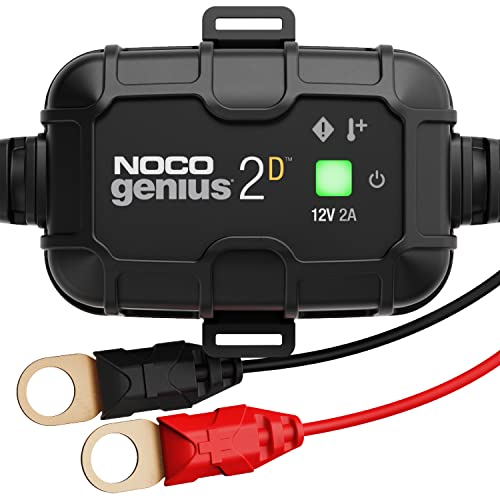
A battery maintainer, sometimes called a trickle charger, is built for exactly this problem: it connects to the battery and delivers a small current, just enough to offset the vehicle's parasitic draw and the battery's own self-discharge, without overcharging it. A solar maintainer, like the Saillong 12V 2.5W Solar Car Battery Charger at $15.99, does the same job using a small panel instead of a wall outlet, useful for a car parked outdoors away from power.
For a battery a maintainer cannot reach, such as a second car parked at a work site, simply driving the vehicle for a stretch every couple of weeks lets the alternator recharge the battery, though a maintainer left connected is a more reliable fix than remembering to drive an unused car on a schedule.
How do I know if a parked battery has actually gone bad, or just discharged?
A battery that has simply discharged from sitting will generally take and hold a charge normally once put on a charger, and read close to 12.6V resting once fully charged again. A battery that has actually degraded from age or repeated deep discharges may accept a charge but fail to hold it for long, or fail a load test even after showing a full voltage reading. If a battery needs charging repeatedly after only short periods sitting unused, that pattern points toward the battery itself wearing out rather than just normal parasitic draw.
Does an older car drain faster than a newer one when parked?
Newer vehicles often have more onboard electronics, such as keyless entry, security systems, and always-on infotainment modules, which can mean a somewhat higher baseline parasitic draw than an older, simpler vehicle. At the same time, a newer car typically has a newer, healthier battery with its full rated capacity intact, which offsets some of that extra draw.
In practice, battery age and condition tend to matter more than the vehicle's age alone. A ten year old car with a battery replaced within the past year or two often holds up better sitting parked than a newer car running on its original, aging battery.
Maintainers that keep a parked battery topped off
Prices change often.


Frequently asked questions
How long can a car sit before the battery dies?
It varies by vehicle and battery age, but a healthy battery in a car with a typical parasitic draw can often sit several weeks before reaching a voltage too low to start reliably. An older or already-weak battery can reach that point much sooner, which is part of why a maintainer is worth using for any vehicle that regularly sits unused.
Does disconnecting the battery stop it from draining?
Disconnecting the negative terminal removes the vehicle's parasitic draw, so the battery is only losing charge to its own natural self-discharge rate, which is slower. This works but means resetting the clock, radio presets, and sometimes other settings once reconnected, so a maintainer is often the more convenient option for a car parked regularly.
Is a solar battery maintainer as effective as a plug-in one?
A solar maintainer, like the Callsun 7.5W Solar Battery Maintainer at $19.99, works well for a car parked outdoors with regular sun exposure, since the panel generates the small current needed to offset parasitic draw. It is less effective for a car parked in a garage or shaded area with little direct sunlight, where a plug-in maintainer connected to household power is the more reliable option.
Will driving my car occasionally instead of using a maintainer keep the battery healthy?
It can help, since the alternator recharges the battery while driving, but a short trip may not run long enough to fully offset a deep discharge, especially with a lot of accessory use during that drive. A maintainer left connected during longer periods of storage does a more consistent job than an occasional short drive.
Why does my dash cam's parking mode make my battery die faster when parked?
A dash cam recording in parking mode adds roughly 0.4 amp of draw on top of the vehicle's own parasitic draw, which is a meaningful addition for a car already sitting for days at a time. Pairing a hardwired dash cam with a battery maintainer, or switching to a standalone dash cam battery pack, keeps that extra draw off the car's starter battery.
Is it worth buying a new battery instead of using a maintainer?
A maintainer and a healthy battery work together rather than one replacing the other; even a brand new battery will still self-discharge and face the vehicle's parasitic draw while parked. If the battery is old enough that it no longer holds a charge well, replacing it is the right fix, and adding a maintainer afterward keeps the new battery healthier for longer during periods the car sits unused.